Recycling and Sustainability for Landscapers St Johns Wood
 At Landscapers St Johns Wood, recycling and sustainability are built into every stage of our outdoor work, from pruning and planting to clearance and green waste handling. Our aim is to provide an eco-friendly waste disposal area approach that reduces landfill reliance, supports local reuse, and keeps materials moving through responsible recovery routes. As a trusted landscapers St Johns Wood service, we treat sustainable operations as part of the job, not an extra.
We are committed to a recycling percentage target of 90% for suitable waste streams, including green cuttings, soil, timber offcuts, plant containers, metal fixings, and selected hard landscaping materials. This target helps us measure performance and improve every season. For many projects, our team separates waste at source so that recyclable material is diverted into the correct stream before it leaves site. That includes careful handling of soil, branches, leaves, cardboard packaging, and reusable edging or stone where possible.
Working across St John’s Wood means operating within wider borough systems that increasingly encourage waste separation, contamination reduction, and smarter recycling habits. In practice, that can mean splitting organic matter from mixed construction waste, keeping metals apart from general rubbish, and sending clean inert material to appropriate recovery facilities.  These small changes make a big difference in the wider sustainable rubbish area strategy, especially on larger garden redesigns where multiple waste types are generated.
Our recycling process is designed around local infrastructure and reliable handling routes. We use recognised local transfer stations that can sort, consolidate, and forward materials to suitable processors. These facilities help keep collections efficient while supporting a lower-waste chain of custody. By choosing transfer points with strong recycling performance, we reduce unnecessary haulage and improve the chance that materials are reused, repurposed, or recycled rather than discarded.
 For landscaping jobs, the most common recycling activity involves green waste. Grass, hedge trimmings, branch wood, and plant matter are separated for composting or biomass recovery where available. We also look closely at timber from old sleepers, fencing, and broken garden structures, sending clean wood into the correct recycling stream. In areas like St John’s Wood, where mixed residential and managed-garden properties often produce varied waste, this disciplined sorting helps us keep the job site tidy and the environmental impact low.
We also support a practical reuse-first model. Items such as terracotta pots, mature but healthy plants, decorative stone, and usable garden fixtures may be suitable for donation or redistribution. When disposal is unavoidable, our goal is still to keep the material within circular systems. This is part of how our landscaper St Johns Wood operations contribute to a more responsible local waste culture, balancing efficiency with environmental care.
Charitable partnerships are another important part of our sustainability commitment. We work with charities and community reuse organisations that can accept suitable materials such as surplus planters, compost, timber, tools, and salvageable garden items. Where items are safe and practical to reuse, donation can extend their life and reduce the need for new production. These partnerships also support local community projects, school gardens, and social enterprise initiatives that benefit from affordable reused materials.
To reduce emissions during collections and site visits, we operate low-carbon vans as part of our fleet strategy. These vehicles are chosen to cut fuel use and lower operational carbon output while still providing the payload and reliability needed for landscaping work. Combining efficient route planning with modern low-emission transport helps us deliver a greener service without compromising on punctuality or site cleanliness. For a landscaper in St Johns Wood, lower transport emissions are a meaningful part of overall sustainability.
Our approach to the sustainable rubbish area also includes separating non-organic waste carefully. Packaging, plastics, metals, old fixings, and inert rubble are assessed individually so they can be directed to the right process. In boroughs that promote source separation, this method aligns well with local expectations and makes it easier to recover value from waste. We also keep a close eye on contamination, because cleaner recycling loads typically achieve better outcomes and higher recovery rates.
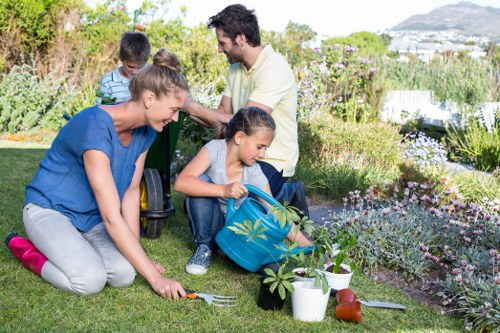 Sustainability is not just about disposal; it is also about reducing waste before it is created. We specify materials with a longer service life, choose repair over replacement when suitable, and design planting schemes that can thrive with less ongoing intervention. This can reduce the volume of green waste generated over time, while also cutting the number of trips needed for maintenance and removal. For clients looking for landscapers St Johns Wood with an environmentally responsible focus, this preventative approach adds long-term value.
We also recognise that different garden tasks produce different waste profiles. Tree surgery, hedge maintenance, lawn renovation, and hard landscaping each require tailored handling. For example, arisings from pruning can often be recycled quickly, while stone, soil, and mixed spoil may need separate transfer or processing routes. By matching the waste stream to the correct outlet, we help maintain a high standard of recycling efficiency across all projects.
 As part of our broader sustainability promise, we continue to review our recycling performance, improve vehicle efficiency, and strengthen community reuse links. Every load we handle is an opportunity to reduce landfill, recover usable resources, and support cleaner local environments. Whether the task is a small garden tidy-up or a larger landscaping transformation, our landscapers St Johns Wood team focuses on responsible disposal, practical reuse, and lower-carbon operations from start to finish.

